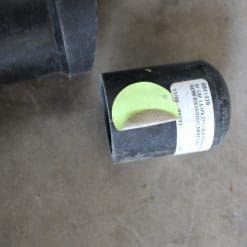
Butt fusion (more formally called butt fusion welding) is a method of joining two pieces of thermoplastic pipe by heating their ends and pressing them together.
It’s commonly used for pipes made from materials such as:
- High-Density Polyethylene (HDPE)
Polypropylene (PP)
How it works
- The ends of two pipes are aligned in a fusion machine.
- The pipe ends are trimmed (faced) to create smooth, square surfaces.
- A heated plate is placed between the pipe ends to melt the material.
- The heater is removed.
- The softened pipe ends are pressed together under controlled pressure.
- The joint is held in place while it cools.
As the molten plastic from both pipes mixes and solidifies, it forms a continuous joint that can be as strong as—or sometimes stronger than—the original pipe.
Advantages
- Creates a leak-free joint.
- No adhesives, solvents, or mechanical fittings are required.
- High strength and durability.
- Suitable for water, gas, industrial, and wastewater pipelines.
Common applications
- Municipal water distribution systems
- Natural gas pipelines
- Mining and industrial piping
- Irrigation systems
What the finished joint looks like
A properly fused joint typically has a raised bead of plastic around the circumference where the two pipe ends were pressed together. Inspectors often examine this bead to help verify that the fusion process was performed correctly.
- Hive CertifiedThis seller has been reviewed and approved by BranaBee for reliability and product quality. Make an Offer