What Is a Socket Weld?
Socket welding (socket weld) is a pipe-joining method in which a pipe is inserted
into a recessed area (the “socket”) of a fitting, valve, or flange, and then a
fillet weld is applied around the outside where the pipe meets the fitting.
How It Works
- The pipe end is cut and prepared.
- The pipe is inserted into the socket of the fitting.
- A small gap (typically about 1/16 inch or 1.6 mm) is left between the pipe end
and the shoulder inside the socket to allow for thermal expansion during welding. - A fillet weld is made around the circumference of the joint.
- The weld is inspected according to the applicable code or specification.
Typical Applications
Socket welds are commonly used for:
- Small-diameter piping systems (typically 2 inches NPS and smaller)
- High-pressure service
- Steam systems
- Hydraulic systems
- Process piping in chemical and power plants
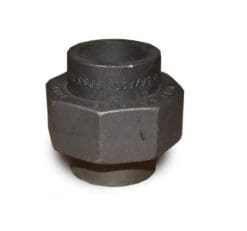
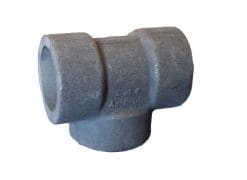
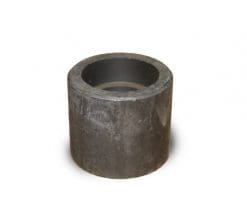
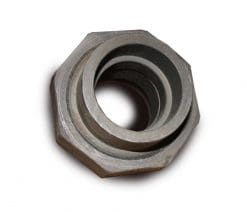
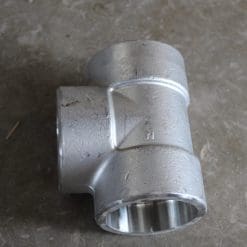
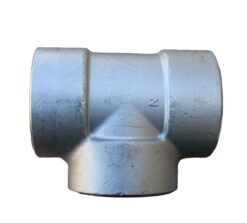
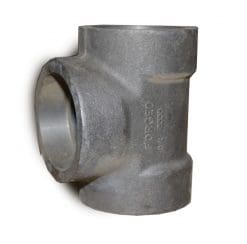
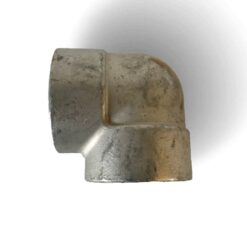
Common socket-weld fittings include:
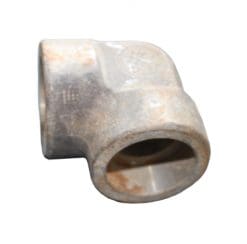
- Elbows
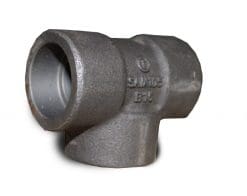
- Tees
- Couplings
- Reducers
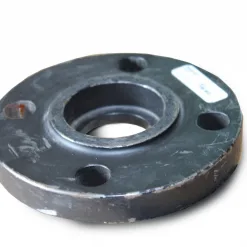
- Socket-weld flanges
Advantages
- Easier alignment than butt welding for small pipes.
- No need for precise end preparation or beveling.
- Strong, reliable joints for high-pressure applications.
- Faster assembly for small-bore piping.
Disadvantages
- The internal recess can create a crevice where corrosion may occur.
- Not generally preferred for services requiring complete internal cleanliness.
- Less suitable for large-diameter piping.
- Inspection of the weld root is not possible because it is hidden inside the socket.
Socket Weld vs. Butt Weld
| Feature | Socket Weld | Butt Weld |
|---|---|---|
| Pipe Fit-Up | Pipe inserts into socket | Pipe ends joined edge-to-edge |
| Typical Pipe Size | Small bore (≤ 2 in.) | All sizes, especially larger pipes |
| Weld Type | Fillet weld | Groove weld |
| Internal Flow Path | Small internal shoulder/recess | Smooth bore when properly welded |
| Common Use | Small, high-pressure piping | Process, transmission, and large piping systems |
Summary
A socket weld produces a strong connection with relatively simple fabrication,
while a butt weld generally provides a smoother internal flow path and is
preferred for larger piping systems.
- Hive CertifiedThis seller has been reviewed and approved by BranaBee for reliability and product quality. Make an Offer
- Hive CertifiedThis seller has been reviewed and approved by BranaBee for reliability and product quality. Make an Offer
- Hive CertifiedThis seller has been reviewed and approved by BranaBee for reliability and product quality. Make an Offer
- Hive CertifiedThis seller has been reviewed and approved by BranaBee for reliability and product quality. Make an Offer
- Hive CertifiedThis seller has been reviewed and approved by BranaBee for reliability and product quality. Make an Offer
- Hive CertifiedThis seller has been reviewed and approved by BranaBee for reliability and product quality. Make an Offer
- Hive CertifiedThis seller has been reviewed and approved by BranaBee for reliability and product quality. Make an Offer
- Hive CertifiedThis seller has been reviewed and approved by BranaBee for reliability and product quality. Make an Offer
- Hive CertifiedThis seller has been reviewed and approved by BranaBee for reliability and product quality. Make an Offer
- Hive CertifiedThis seller has been reviewed and approved by BranaBee for reliability and product quality. Make an Offer
- Hive CertifiedThis seller has been reviewed and approved by BranaBee for reliability and product quality. Make an Offer
- Hive CertifiedThis seller has been reviewed and approved by BranaBee for reliability and product quality. Make an Offer
- Hive CertifiedThis seller has been reviewed and approved by BranaBee for reliability and product quality. Make an Offer