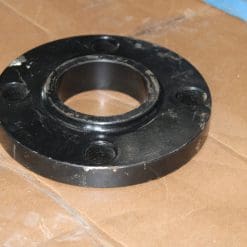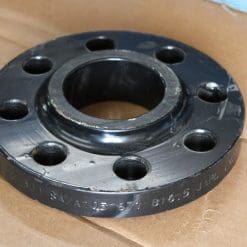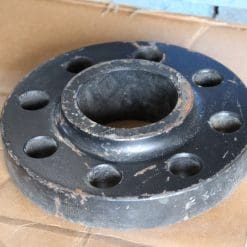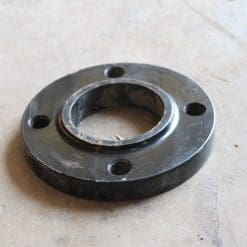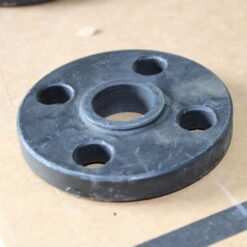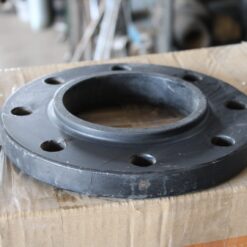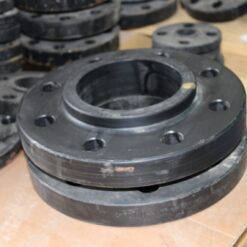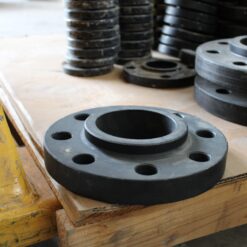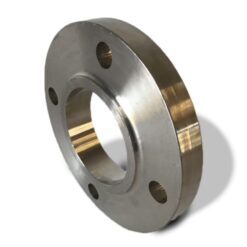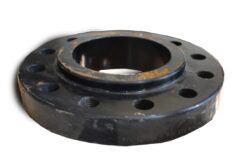
What Is a Slip-On Flange?
A slip-on flange is a type of piping flange that is designed to “slip” over the
outside diameter of a pipe and then be welded in place. It is commonly used in
low to moderate pressure applications where ease of installation and cost are
important considerations.
How It Works
The pipe is inserted through the center of the slip-on flange until it reaches
the desired position. The flange is then aligned and welded on both the inside
(bore) and outside (hub) to secure it to the pipe and create a pressure-tight
connection when bolted to a mating flange.
Typical Applications
- Low and medium pressure piping systems
- Oil and gas production facilities (non-critical service)
- Utility and process piping
- Water, air, and non-corrosive fluid systems
- Temporary or non-critical piping layouts
Advantages
- Easier and cheaper to align than weld neck flanges
- Lower material cost compared to some other flange types
- Requires less precise pipe cutting than butt-weld connections
- Can be installed in tight spaces more easily
Disadvantages
- Lower strength compared to weld neck flanges
- Requires two welds (inside and outside) for proper installation
- Less suitable for high-pressure or high-temperature service
- Potential for leakage if welding is not performed correctly
Slip-On Flange vs. Weld Neck Flange
| Feature | Slip-On Flange | Weld Neck Flange |
|---|---|---|
| Installation | Slides over pipe and is welded | Butt-welded to pipe with tapered hub |
| Strength | Moderate | High |
| Cost | Lower | Higher |
| Best Use | Low to medium pressure systems | High pressure/critical service |
Summary
A slip-on flange is a cost-effective piping flange that slides over a pipe and
is welded in place. It is widely used in non-critical oil and gas and
industrial systems where moderate pressure ratings and ease of installation are
sufficient.
- Hive CertifiedThis seller has been reviewed and approved by BranaBee for reliability and product quality. Make an Offer
-
Hive CertifiedThis seller has been reviewed and approved by BranaBee for reliability and product quality. Make an Offer
2″ 300 RF Slip-On Flange – Carbon Steel – Imported
Original price was: $10.44.$7.00Current price is: $7.00. View Details - Hive CertifiedThis seller has been reviewed and approved by BranaBee for reliability and product quality. Make an Offer
- Hive CertifiedThis seller has been reviewed and approved by BranaBee for reliability and product quality. Make an Offer
- Hive CertifiedThis seller has been reviewed and approved by BranaBee for reliability and product quality. Make an Offer
- Hive CertifiedThis seller has been reviewed and approved by BranaBee for reliability and product quality. Make an Offer
- Hive CertifiedThis seller has been reviewed and approved by BranaBee for reliability and product quality. Make an Offer
- Hive CertifiedThis seller has been reviewed and approved by BranaBee for reliability and product quality. Make an Offer
- Hive CertifiedThis seller has been reviewed and approved by BranaBee for reliability and product quality. Make an Offer
- Hive CertifiedThis seller has been reviewed and approved by BranaBee for reliability and product quality. Make an Offer
- Hive CertifiedThis seller has been reviewed and approved by BranaBee for reliability and product quality. Make an Offer
- Hive CertifiedThis seller has been reviewed and approved by BranaBee for reliability and product quality. Make an Offer