What Is a Non-Asbestos Gasket?
A non-asbestos gasket is a sealing material made from synthetic fibers,
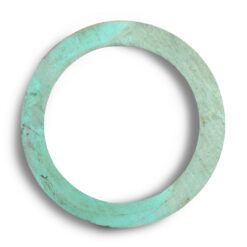
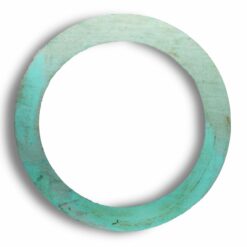
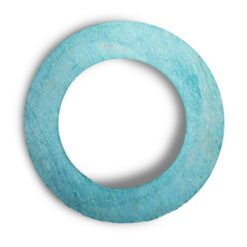
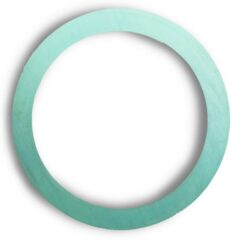
elastomers, and fillers rather than asbestos. Technicians install these gaskets between flange faces to prevent leaks in piping and equipment connections. In oil and gas facilities, crews commonly recognize them as green or blue sheet material that they cut into gasket shapes.
Material Composition
Manufacturers combine aramid fibers, synthetic fibers, rubber binders, and specialty fillers to create a durable sealing material. This construction
provides strength, flexibility, and chemical resistance while eliminating the health concerns associated with asbestos-containing products.
Common Applications
Operators use non-asbestos gaskets in a wide range of piping and equipment connections, including:
- Raised face flange connections
- Water and utility piping systems
- Oil and gas process piping
- Pumps and valves
- Heat exchangers and tank connections
- General industrial equipment
Performance Characteristics
Non-asbestos gaskets compress easily and conform to minor flange surface
imperfections. As a result, they create a reliable seal in many moderate
pressure and temperature applications. However, their performance depends on the specific material formulation and operating conditions.
Advantages
- Provides reliable sealing in a wide range of services
- Offers a safer alternative to asbestos-based materials
- Cuts easily for custom gasket fabrication
- Costs less than many specialty gasket types
- Works with many common process fluids and utility services
Limitations
- Handles lower temperatures and pressures than metal gasket designs
- Can degrade when exposed to incompatible chemicals
- May require replacement after repeated thermal cycling
- Does not provide the same sealing performance as RTJ or spiral wound gaskets in critical service
Relevant Specifications
- ASME B16.21: Nonmetallic flat gaskets for pipe flanges
- ASTM F104: Classification system for nonmetallic gasket materials
Summary
A non-asbestos gasket is a fiber-reinforced sealing material used to prevent leaks in flange and equipment connections. Its combination of affordability, flexibility, and chemical resistance makes it a common choice for general industrial and oilfield service.
- Hive CertifiedThis seller has been reviewed and approved by BranaBee for reliability and product quality. Make an Offer
- Hive CertifiedThis seller has been reviewed and approved by BranaBee for reliability and product quality. Make an Offer
- Hive CertifiedThis seller has been reviewed and approved by BranaBee for reliability and product quality. Make an Offer
- Hive CertifiedThis seller has been reviewed and approved by BranaBee for reliability and product quality. Make an Offer