What Does 4000 PSI Mean?
A 4000 PSI rating indicates that a component is designed to operate at a maximum
working pressure of 4000 pounds per square inch under specified service
conditions. In oil and gas service, this rating most commonly applies to
hammer unions and related flow iron used in well servicing operations.
How It Is Used
Manufacturers assign pressure ratings to ensure equipment matches the demands
of the system. In 4000 PSI service, operators typically use equipment designed
for moderate to high-pressure applications where reliability and safe containment
remain critical.
Common Application
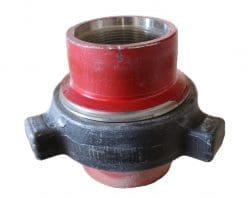
The primary product associated with this rating in your catalog is the FIG 400
hammer union. Technicians use this connection type in field assemblies where
they need a strong, quick-assembly joint that can handle repeated make-up and
break-out cycles.
Performance Characteristics
A FIG 400 hammer union provides a mechanical, threaded-and-hammered connection
that seals under pressure using precision-machined metal-to-metal or elastomer
sealing surfaces. When technicians tighten the union, the components compress
together and create a pressure-tight seal suitable for oilfield service.
Advantages
- Provides quick make-up and break-out in the field
- Handles moderate to high-pressure oilfield service
- Supports repeated assembly without welding
- Works well in portable and temporary flow systems
Considerations
- Operators must match pressure rating across all components in the line
- Sealing surfaces require inspection for wear and damage
- Improper make-up can lead to leaks or joint failure
- Pressure rating can vary with service conditions and manufacturer design
Summary
A 4000 PSI rating identifies equipment designed for higher-pressure oilfield
service. In this case, the FIG 400 hammer union represents the primary product,
providing a robust, reusable connection for flow iron and well servicing systems.
- Hive CertifiedThis seller has been reviewed and approved by BranaBee for reliability and product quality. Make an Offer